How to Make the Perfect Gin & Tonic (According to Science and Experts)
Author
Victor Leprêtre
Date
The Gin & Tonic looks simple enough: gin, tonic water, ice, maybe a garnish. Pour and done, right? Of course you can. And honestly, a simple G&T on a summer evening is perfectly fine. But for those who want to go deeper, there's more. Way more.
What appears to be bartending's most straightforward serve could actually be a masterclass in thermodynamics, molecular chemistry, and sensory perception. While your neighborhood dive might serve you a lukewarm mess in a pint glass with a sad lime wedge, the world's best bartenders and actual scientists know there's a better way.
This isn't about being pretentious. It's about understanding why certain techniques work and why others destroy what could have been a perfect drink. We're going to break down the science, decode the expert wisdom, and show you exactly how to make a G&T that does justice to your gin.
Part 1: What Science Actually Says
The Cold Hard Truth: Thermodynamics & Henry's Law
The Science: Henry's Law—a fundamental principle of physical chemistry—proves that CO₂ solubility increases dramatically as temperature decreases. In plain English: cold liquids hold way more bubbles than warm ones.
Why It Matters: When you pour warm tonic water, it degases almost immediately. Those bubbles aren't just texture they're aromatics delivery systems. As CO₂ bubbles rise and burst at the surface, they project volatile compounds from your gin into the air and up your nose. No bubbles = half your aromatic experience just vanished.
Everything must be cold. Not cool. Not room temperature. Cold. Your gin, your tonic, your glass, refrigerate them all. This isn't optional.
CO₂ Is an Ingredient, Not a Side Effect
The Science: Research by Saint-Eve (2009) and Yeo (2023) demonstrates that carbonation significantly increases both orthonasal (through the nose) and retronasal (back of the throat) aroma release. Those tiny bubbles are literally catapulting flavor molecules into your sensory receptors.
Why It Matters: Carbonation makes gin breathe. The more effervescence you preserve, the more your gin can express itself. Destroy the CO₂, and you're drinking flat, sad gin water.
Never splash tonic violently into the glass. Never stir more than once. Every aggressive movement kills bubbles, and bubbles are flavor.
Molecular Matchmaking: Why Gin & Tonic Actually Work Together
The Science: Certain gin molecules—like alpha-pinene from juniper—tend to aggregate into clusters that your taste receptors struggle to detect. Tonic water disperses these clusters. Food pairing research shows that terpenes (the aromatic compounds in juniper, citrus, and herbs) disperse better in the presence of sugar, carbonated water, and quinine.
Why It Matters: Tonic doesn't just dilute gin—it unlocks it. The sugar softens quinine's aggressive bitterness. The quinine prevents the sugar from becoming cloying. The carbonation spreads everything evenly across your palate. It's molecular symbiosis.
Choose your tonic carefully. Too sweet, and you'll mask the gin. Too bitter, and you'll overwhelm it. Balance is everything.
Ice: A Thermodynamic Tool, Not a Decoration
The Science: Ice cools through melting, but not all ice melts equally. Small, air-filled, cloudy ice cubes have irregular surfaces that accelerate CO₂ degassing (nucleation points) and melt rapidly, diluting your drink into oblivion.
Why It Matters: Bad ice = rapid dilution = loss of aromatic structure = dead bubbles = ruined drink. Large, dense, clear ice melts slowly, maintains temperature, and preserves carbonation.
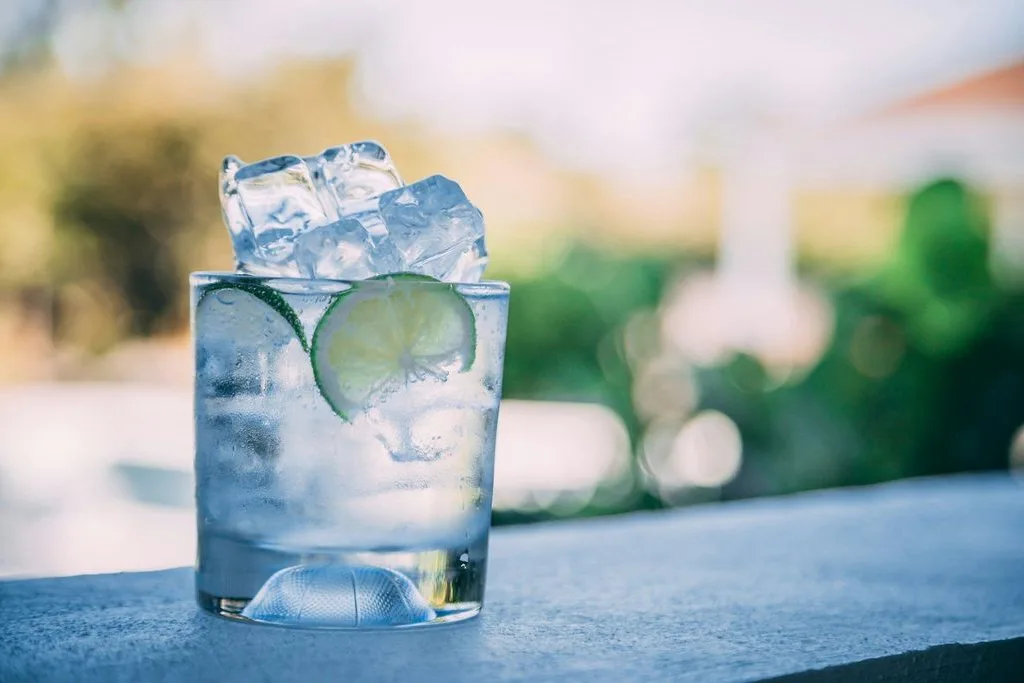
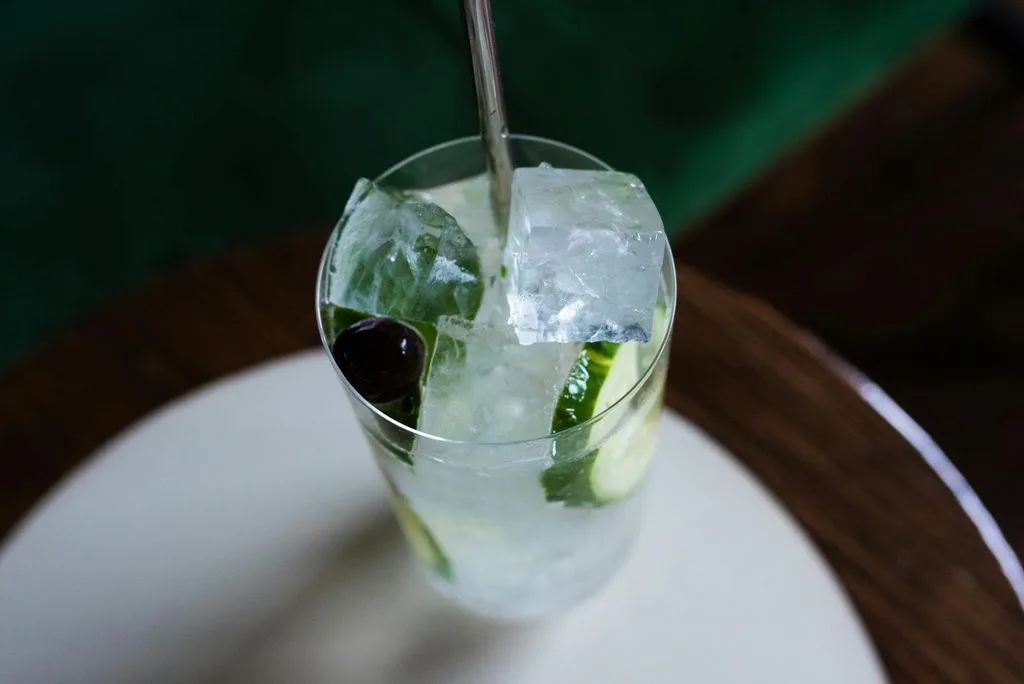
Use large cubes of clear ice. Fill your glass to the brim. Yes, it feels excessive. Yes, it's necessary.
The 40% ABV Sweet Spot: Why Proof Matters
The Science: Ethanol is the solvent that keeps gin's essential oils in solution. Research on the "louche effect" (think absinthe turning cloudy) shows that terpenes separate out when alcohol percentage drops too low. Your gin needs enough proof to maintain its aromatic integrity even after dilution.
Why It Matters: A weak gin or an over-diluted G&T collapses aromatically. The gin's structure must be strong enough to survive the tonic, the ice melt, and the journey to your mouth.
Choose gins at 40% ABV minimum. Respect your ratios to avoid over-dilution.
Part 2: What the Experts Know
Now let's connect the dots between laboratory findings and professional technique. These aren't brand ambassadors, these are bartenders and authors whose reputations depend on getting it right.
The Glass Debate: Highball vs. Copa
Tristan Stephenson (The Curious Bartender) explains that the Copa creates an "aromatic dome" that traps volatiles near your nose, while the Highball's narrow mouth preserves effervescence longer. This ties directly to CO₂ preservation and cold retention. Narrow openings mean less surface area, which translates to slower heat transfer and CO₂ escape.
The Verdict:
Highball: Best for dry, juniper-forward London Dry gins where you want maximum bubble action
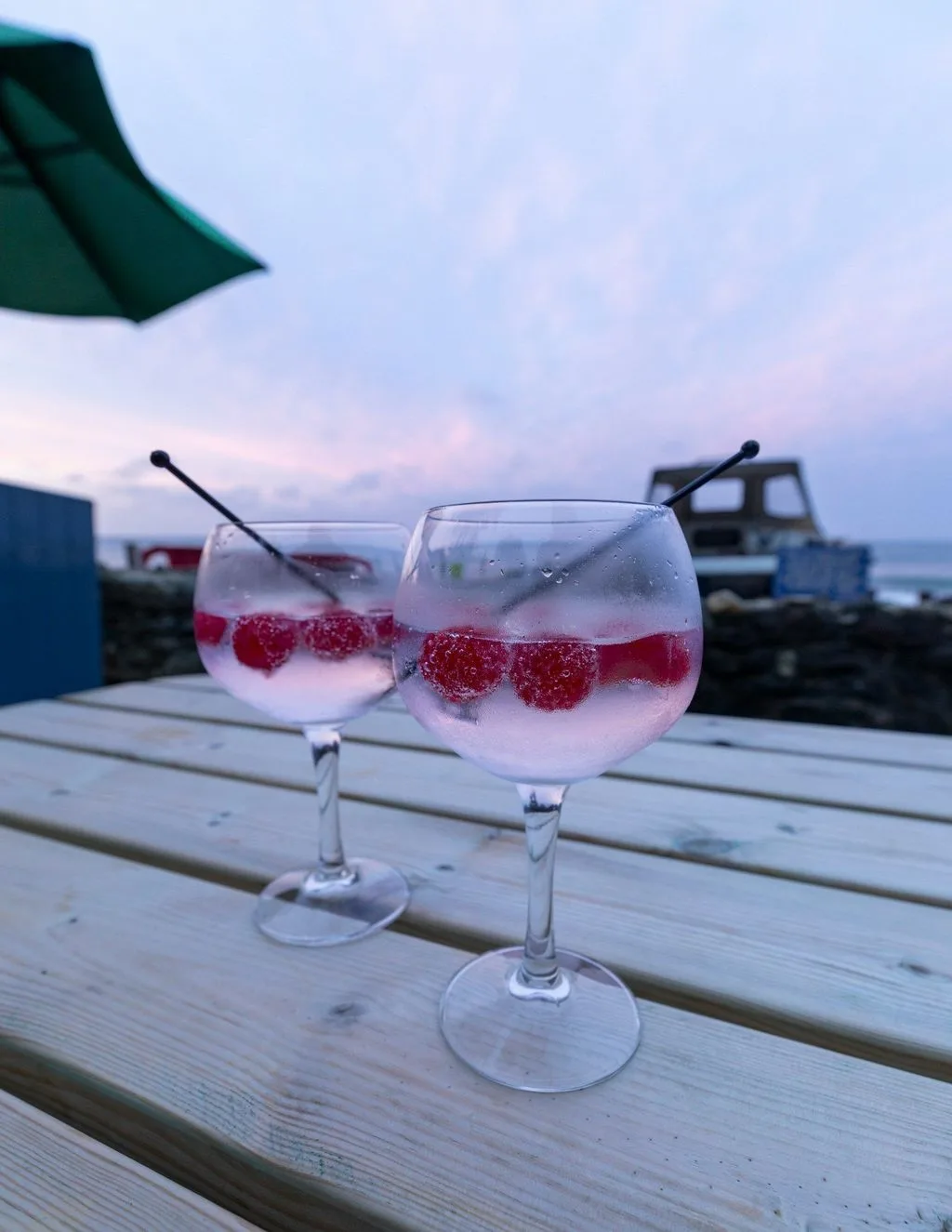
Copa: Best for aromatic, botanical-heavy gins where you want to trap and concentrate those delicate notes
The Golden Ratio: Why 1:3 Dominates
The Spanish Gin Tonica movement and resources like Punch magazine converge on 1:3 (50ml gin to 150ml tonic) as the "optimal window." This ratio maintains adequate ABV for terpene dispersion while achieving the sugar-bitter-aroma balance we explored earlier.
The Verdict:
1:1 = Too strong, gin overpowers tonic
1:3 = Perfect balance ✓
1:4+ = Too sweet, tonic dominates
Pouring Technique: The Physics of Gentleness
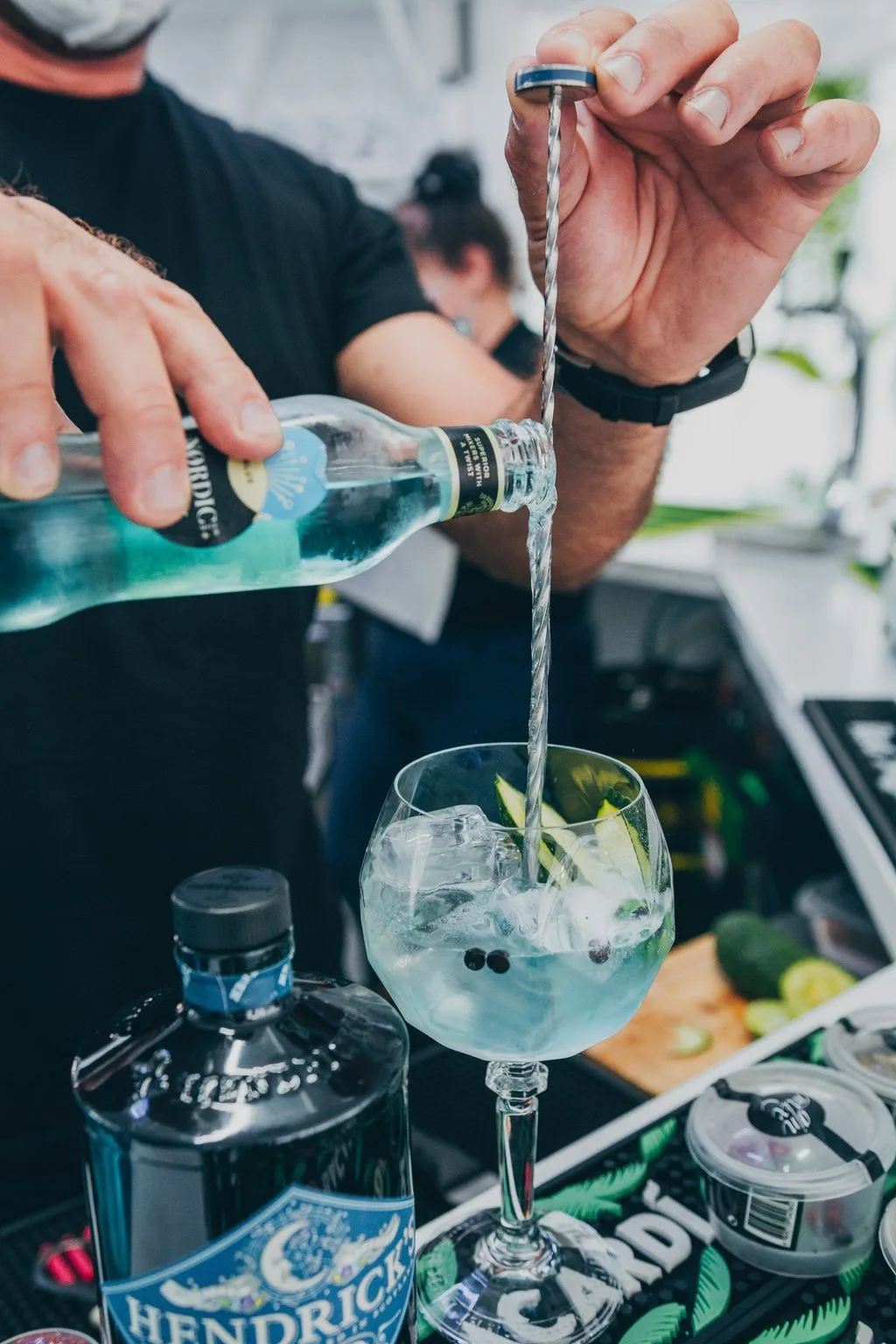
Dave Arnold (Liquid Intelligence) demonstrates that kinetic shock from aggressive pouring destroys CO₂ and alters final flavor. Remember, CO₂ is your flavor delivery system. Treat it roughly, and you're literally pouring your aromatics down the drain.
The Technique:
Tilt your glass (like pouring beer)
Pour tonic slowly down the side
Stir exactly once, gently
Walk away from the spoon
Garnish: Aromatic Amplification, Not Instagram Fodder
Top cocktail bars like Death & Co and The Savoy treat garnishes as "aromatic extensions" of the gin itself, following two principles:
Resonance: Amplify what's already in the gin (rosemary with a rosemary-forward gin)
Contrast: Add one distinctive element that creates tension (black pepper, basil, cucumber)
What you smell while you drink massively influences what you taste. A properly expressed garnish is literally modulating your sensory experience.
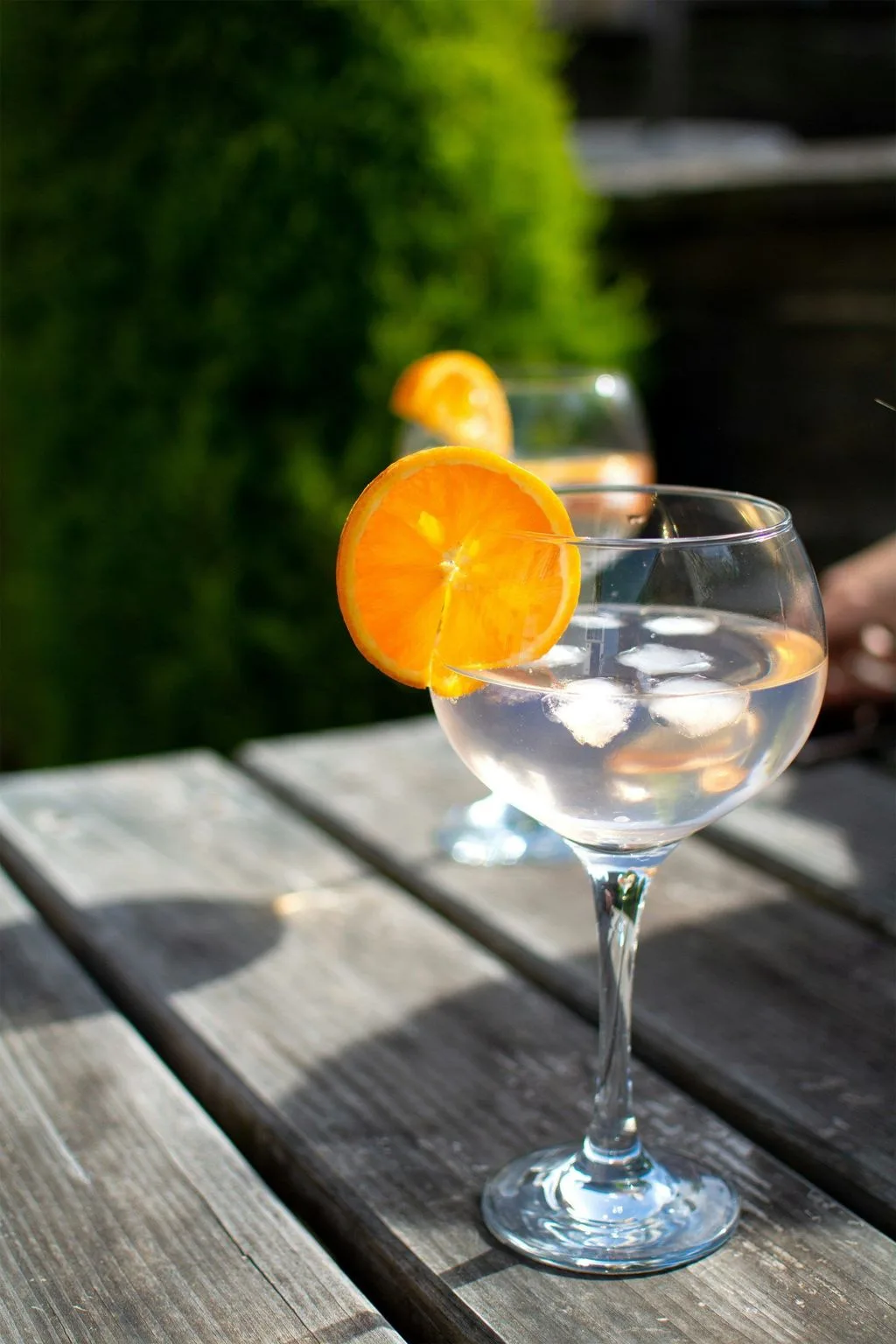
The Rule: One well-expressed citrus peel beats a fruit salad. Express the oils over the drink, then drop it in. Less is more.
Part 3: The Five Commandments of the Perfect G&T
Let's synthesize all of this into actionable principles:
1. Everything Must Be Cold
Henry's Law and CO₂ stability aren't suggestions. Ruhlman and Stephenson both hammer this point home: refrigerate your gin, tonic, and glass for a minimum of 2 hours before making your drink. No shortcuts.
2. Protect the Bubbles Like Your Life Depends On It
Dave Arnold proved it in the lab, and every serious bartender knows it. CO₂ transports aromatics. Gentle pour, single stir, no aggressive movements. Your impatience is killing your drink.
3. Respect the Ratio
The British and Spanish bartending schools converged on 1:3 for a reason. This ratio maintains ABV and allows terpenes to disperse properly. 50ml gin to 150ml tonic. Memorize it.
4. Ice Must Be Dense and Massive
Nucleation and dilution control aren't abstract concepts when you're drinking a watery mess. High-end bars and the entire Gin Tonica movement use large, clear ice cubes that fill the glass completely. Follow their lead.
5. Garnish With Purpose
Death & Co and The Savoy don't throw random fruit into drinks. Orthonasal perception is real. One expressed peel that complements your specific gin beats a farmers market in your glass.
The Perfect G&T: Step-by-Step
Finally, what you came here for. This is our understanding after diving deep into the science and techniques, not gospel. But it works.
Preparation
Chill gin and tonic in refrigerator for 2+ hours
Freeze your Copa or Highball glass
Build
Fill glass completely with large, clear ice cubes
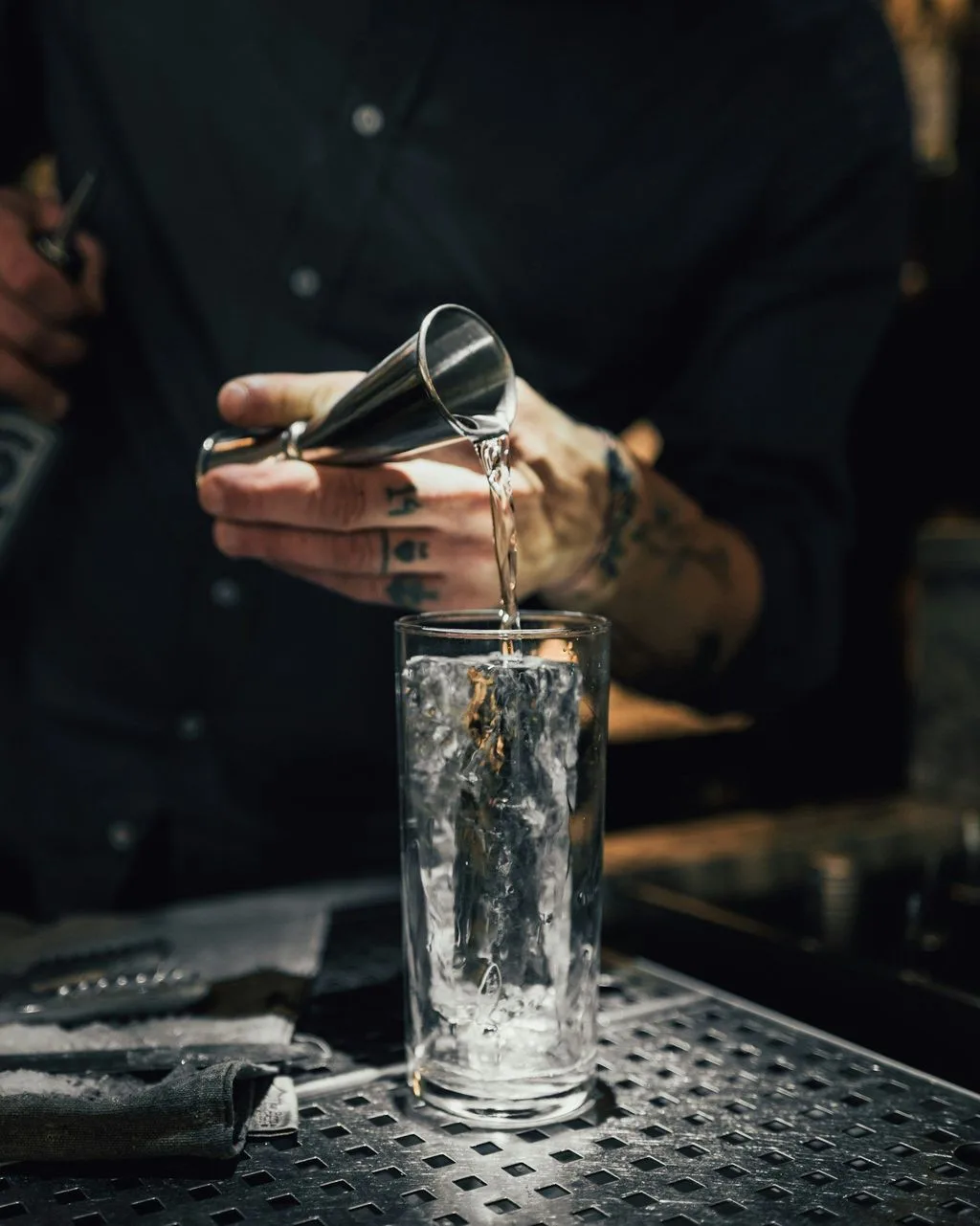
Pour 50ml gin (40%+ ABV) over ice
Add 150ml tonic slowly, tilting glass and pouring down the side
Stir once gently with a bar spoon
Add garnish that complements your gin's botanicals (expressed citrus peel for citrus-forward gins, herbs for herbal profiles, etc.)
Serve immediately
Total time: 30 seconds
The Mistakes Everyone Makes
Let's be honest, we've all made at least one of these. Most of us have made all of them.
❌ Room temperature tonic = Instant degassing, dead aromatics ❌ Tiny ice cubes = Rapid dilution, warm drink ❌ Aggressive stirring = Bubble destruction, flat taste ❌ Random ratios = Either gin-bombed or tonic-dominated ❌ Garnish overload = Confused aromatics, visual clutter ❌ Weak gin = Collapse after dilution
Most of these come from treating the G&T as "simple." It's not. It just looks simple.
FAQ: Your Questions, Answered
Does tonic brand really matter? Absolutely. Quality tonics maintain carbonation better, use real quinine, and balance sugar appropriately. Fever-Tree, Q Tonic, and Fentimans are solid choices—but match the tonic profile to your gin.
Can I use flavored tonics? You can, but understand you're adding a third flavor component. Elderflower tonic with an already-floral gin becomes monotone. Use flavored tonics for contrast, not amplification.
What about gin temperature? Fridge cold (4-6°C / 39-43°F). Freezer cold (-18°C / 0°F) can mute aromatics. You want cold enough to preserve CO₂, warm enough to release flavor.
Does glass shape really change taste? Yes. The science of headspace (the air between liquid and your nose) is well-established. Different shapes concentrate or disperse aromatics differently.
What if I don't have clear ice? Use the biggest, densest cubes you have. Freeze boiled water for clearer results. Or buy clear ice—many cocktail shops now sell it.
The Bottom Line
The perfect Gin & Tonic isn't about following rules for the sake of rules. It's about understanding why each step matters and how small choices create massive differences in your glass.
Two ingredients demand respect for five fundamental principles: thermodynamics, carbonation, molecular interaction, dilution control, and sensory perception.
Science explains why. Experts show how. You just need to execute.
Cold everything. Gentle pour. Proper ratio. Big ice. Purposeful garnish.
Do these things, and you'll make a G&T that actually deserves the gin you bought.
Now go make one.
What Are Perfect Serves in Ginventory?
At Ginventory, we define the perfect serve as the way the distillers intended you to drink their creation. These are people who spent months (sometimes years) meticulously crafting botanical balances and pairing recommendations. Does this mean you can't explore your own recipes? Absolutely not. Experimentation is half the fun. But we believe that when someone has invested that much expertise into a specific pairing, it's worth experiencing that vision first. That's why our focus here is on understanding the fundamentals that make any serve work, so you can appreciate both the distiller's intent and your own creative variations.